Crafting a Small Morning Station: How to Make Slow Mornings Feel Effortless
Problem — What happens in the first ten minutes?
I began this project with a question: how can a tiny, intentional setup change the tenor of my morning without feeling like yet another thing to manage? In many homes the first minutes are a scramble—searching for keys, fumbling for the phone, or standing in the kitchen unsure where to begin. The aim of a small morning station is not to add ritual for ritual’s sake but to create a visible, reachable anchor that lowers friction and orients the day.
Principles — The studio’s rules for a useful morning station
Over a few weeks of trial and small iterations I tested what actually stuck. These are the principles I settled on:
- Size and scope: Keep it compact. A tray, a shelf, or a shallow box is easier to maintain than a whole counter dedicated to ritual.
- One-purpose clarity: Each item should serve a single, clear function—hydration, light, a prompt, or a practical object like keys.
- Sensory anchor: Include something you can touch, smell, or see that gently signals the change from night to day (a cup, a spritz of citrus, a piece of fabric).
- Accessibility: Place the station at a natural transition point: bedside, entry, or the place you pass in the first minutes.
- Low-maintenance aesthetics: Choose materials and colors that age well and forgive a little disorder—wood, linen, stone.
- Adaptability: Build the station so items can rotate seasonally or with your needs without needing a redesign.
Examples — Three compact builds and why they worked
1) Bedside tray for slow wakes
Setting: small bedroom without a nightstand. I used a shallow wooden tray placed on a low shelf beside the bed.
- Items: a ceramic mug, a small carafe of water, a folded linen handkerchief, and a paperback for ten-minute reading.
- Why it works: The tray signals a single intention—gentle waking. The handkerchief is tactile, the carafe reduces trips to the kitchen, and the book offers a non-digital prompt.
2) Entryway shelf for a calm departure
Setting: narrow hall with a slim shelf near the door.
- Items: shallow bowl for keys, a tiny jar of lip balm, a lightweight shawl, and a postcard-sized checklist.
- Why it works: This station short-circuits the usual morning flurry. The postcard checklist lists three micro-tasks—water, jacket, bag—and is small enough to glance at while zipping a coat.
3) Kitchen counter corner for a mindful start
Setting: small kitchen with limited counter space.
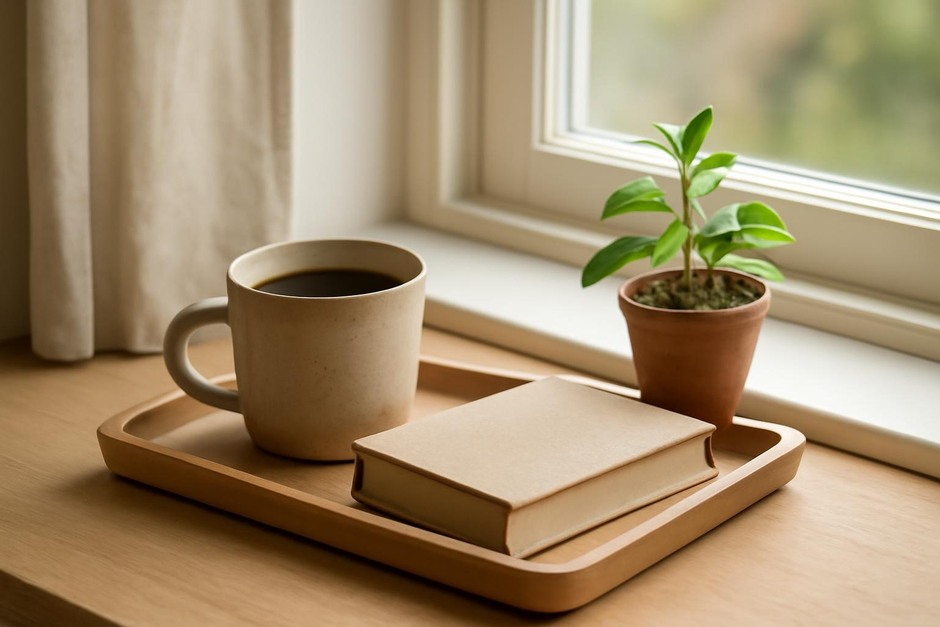
- Items: a small plant, a heatproof mug, a spoon, and a compact jar of whole beans or tea leaves.
- Why it works: Making the first drink becomes a deliberate moment. The plant adds a living presence and the single-ingredient jar keeps decision-making minimal.
Process — How I built and tested the station (studio notes)
Question: Which minimal combination of objects reliably produced a calmer start? Process: I created three variations (bedside, entry, kitchen), used each for two weeks, and noted weekly what was used and what accumulated clutter. I removed anything that required extra maintenance (e.g., fresh flowers needed too much care) and kept tactile and consumable items that naturally reset (water, tea, a handkerchief).
Review: The most durable stations were those that required no extra rituals to keep functional. Items you use daily will stay; decorative-only objects tend to be ignored. The best small stations felt like helpers, not exhibits.
Concise Practice Checklist
- Choose your location: pick the place you naturally pass in the first ten minutes.
- Limit to 3–5 items: aim for one practical item, one sensory anchor, and one inspirational prompt.
- Select durable materials: wood, ceramic, and linen hide small imperfections and reduce upkeep.
- Test for two weeks: keep notes on what you actually use and remove extras.
- Rotate seasonally: swap a shawl for sunglasses; swap tea for iced water when needed.
- Make it easy to reset: use a tray or shallow bowl so clearing the station is quick.
In short: a small morning station is less about adding ritual and more about removing friction. Design it to be helpful, not ornamental, and you’ll find the first minutes of the day a little softer—without extra work.